
An End-of-Year Long Read
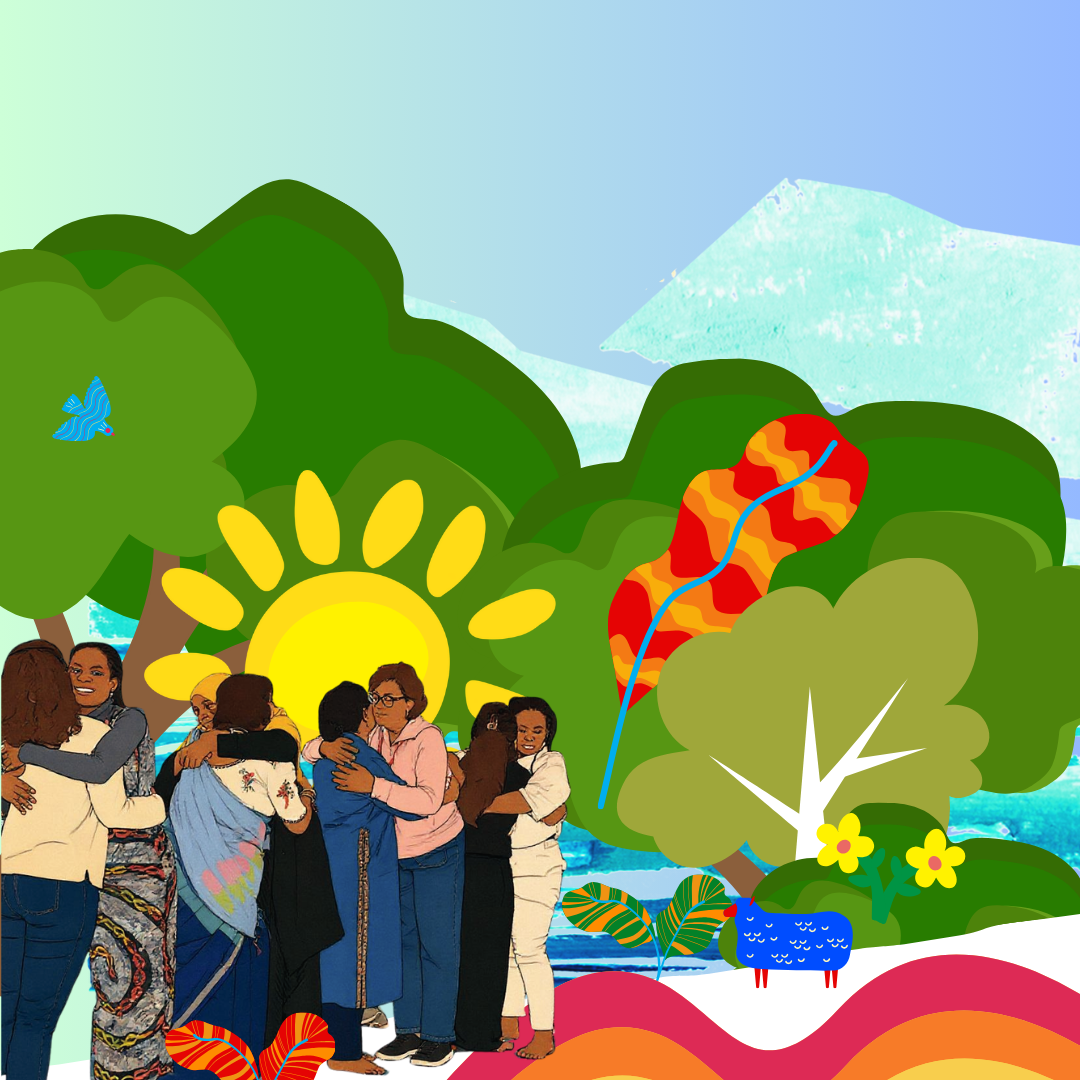
As we arrive at the end of 2025, many of us are carrying the weight of a year that has brought one crisis after another in every realm of our lives and every corner of the world. The world feels heavy, trembling under the burden of overlapping crises. Violence continues in so many places. Women, girls, and gender diverse people everywhere are under attack: our organisations have been decimated by funding cuts, and many who were once allies have turned against us, and turned ‘gender equality’ and ‘rights’ into dirty words in their vernacular.
Movements everywhere are stretched, grieving and fighting to preserve hard won gains at the same time. This moment asks us - as feminists and activists for justice - to pause. It asks us to reflect not only on what we have done, but on how we have treated ourselves and one another while doing it. It asks us to look closely at the emotional and political soil of our organising. In times of crises, stress infiltrates our ways of being. Violent ways of operating and patriarchal norms are reverted to - as these systems of being are what we are most used to, and have to work the least at maintaining. When our bandwidth is stretched, we tend to relinquish our feminist principles - at the time that they are most important.
“Feminist organising is only as strong as the care we build within it.”
In a moment when conflict, grief and uncertainty shape so many lives, kindness becomes more than principle. It becomes strategy. It is a way of keeping ourselves human. It shapes the texture of our movements and the way we survive and transform the world.
This is the time of year when many of us slow down, look inward, and take stock of how we have shown up in the world. It is a tender moment, a moment of honesty, where the movement has an opportunity to regenerate itself. And at the centre of that regeneration is how gently, consistently, and intentionally we hold each other.
Holding Space with Care: The Practice of Speaking and Acting with Care
At its core, kindness is the practice of considering impact. It is the soft awareness that our presence in a space shapes how people feel in it. Through words, pauses, tone, and actions, we can either expand someone’s sense of safety or shrink it. And for feminist spaces to be truly liberatory, they must be spaces where people can breathe. Where people feel safe enough to be themselves. Where voice, dignity and agency are lived realities.
Kindness is how we choose to speak to each other. It is the intentional pause before responding. It is our body language, and our facial expressions, and how we communicate that we are listening, that we are open, and that we hear. It is the awareness that our words can soothe or wound. It asks us to express truth with care, to hold accountability with tenderness, and to communicate in ways that honour dignity. Careful speech does not weaken our politics. It strengthens them, because it shows that our values live both in what we fight for and in how we treat one another.
This does not require us to dim our convictions. Neither does it ask us to abandon honesty or accountability. Instead, it asks: How do we hold truth in a way that does not harm? How do we raise difficult questions while still honouring each person’s humanity? When this care shapes the way we communicate, we build spaces where people feel welcomed rather than watched, held rather than judged.
Acting with care is in the way we prepare spaces and move through them. It is in addressing the needs of those who are neurodivergent, living with disabilities, or require additional support, so that everyone can fully participate. It is in the attention we give to who speaks and who is heard, the small gestures that show presence and respect, and the way we notice when someone needs extra space or time. It is reflecting on our own privilege, and stepping back when we recognise it is greater than others’. It is holding space for silence, and ensuring that our actions do not overshadow or decentre others. Careful action turns a space into a living practice of respect, safety, and solidarity, where everyone can engage without fear of being overlooked, excluded, or diminished.
Every feminist space must value safety, voice and empowerment, and these cannot exist without kindness. When our interactions lack care, trust erodes. When our tone is harsh, voices shrink. When power is uneven, people retreat. Kindness turns a gathering into a sanctuary. It supports honest expression. It allows disagreements to be held without fear. At this time of year, when many are emotionally stretched thin, the need for gentle, steady spaces to hold us is critical.
Protecting the Peace Within Ourselves and Between Each Other
A feminist vision has always been a vision of peace - in the world, in our bodies, in our relationships, and in the movements we build. In a year where violence and fear have seeped into global consciousness, the peace we nurture within ourselves and with each other becomes an act of resistance.
Kindness gathers, protects and strengthens peace. It softens the inner turmoil that comes from activism in cruel times. It reduces guilt, resentment and the small self-punishments we often inflict. And it creates fewer wounds between us, which strengthens our collective ability to imagine a peaceful world. Being gentle with others is not simply about avoiding harm. It is also about preserving our own equilibrium. When we choose compassion over cruelty, clarity over contempt, we soften the tightness in our own chests. We move through the world with fewer regrets, fewer self-inflicted wounds, fewer shadows. And in doing so, we make it easier for others to meet us with openness rather than defensiveness.
This peace is fragile, precious, and deeply political. It is the quiet foundation upon which fierce organising can stand. We must prioritise it and protect it with all that we have.
Building Movements That Feel Like Home
For many feminists, our movements are not just spaces for work, they are the few places where we feel seen without explanation. In a world that isolates, punishes, and exhausts us, feminist community is often the closest thing to respite.
That refuge cannot exist without warmth. It cannot survive without generosity, without the simple acts that remind each other: you are safe here, your burden is shared, you are seen, your voice matters. Harshness is abundant in the world outside. If it follows us into movement spaces, something vital collapses. But when kindness leads, the movement becomes a place of solace, a place where people gather strength to keep fighting.
For this refuge to remain real, our organising must feel warm and welcoming. It must offer softness alongside strategy. Kindness is what allows people to return after hard days. It is what makes a space feel like home, rather than another battleground.
Growing Together
We are all learning. We are all unlearning. None of us have fully eradicated the systems that shaped us from our psyches. We have all made mistakes. We have been tired, overwhelmed or reactive. We have miscommunicated. We have forgotten things. We have been human. Kindness is what turns these moments into seeds of growth instead of pellets of shame. It allows us to acknowledge harm without collapsing into self blame, that we then often externalise. It allows us to correct each other without humiliation. Feminist practice demands courage to evolve, to take responsibility, to try again.
Mistakes will happen. Tensions will rise. But learning deepens when people feel cherished, not shamed. When missteps are met with kindness, accountability becomes a bridge rather than a bruise. This softness does not weaken the movement. It strengthens it by ensuring that people can return even after falling short, without fear of being discarded. It allows us to keep moving together, wiser and more whole.
Treating Our Own Bodies and Spirits With Compassion
In this moment of global fatigue, perhaps the hardest kindness is the one we offer ourselves. Rest, gentleness and self-forgiveness are political acts. Patriarchy has conditioned us to police ourselves, to chastise ourselves, to grind our bodies past their breaking points. Colonialism and capitalism have embedded voices in our minds that measure worth through productivity, perfection, and sacrifice.
End of year reflections often turn into harsh self evaluation. Many of us begin counting what we did not finish or what we wish we had done better. Kindness challenges this pattern and interrupts these voices. It reminds us that rest, softness and self-compassion are healing. The voice that tells us we are not enough is the pervasive voice of patriarchy, capitalism and colonial thinking. Being gentle with ourselves at this time of year - and always - is a way of dismantling those messages within our own minds.
Self-kindness asks us to treat ourselves with the tenderness we offer to others. It asks us to soften the edges around failures and to celebrate our survival, our effort and our resilience to keep trying. It enables us to be kind to others - when we are tender with ourselves, we protect our energy to be tender with others. This inward kindness is a rebellion, and a reclaiming of peace that the current system tries to deny us.
A Feminist Response in a World Filled With Crisis
As we reflect on how we dream, how we build. Kindness is not naïve, it is strength. It is a political commitment. It is the soil from which feminist organising grows strong, interconnected and steadfast.
In a world brimming with turmoil, kindness makes our movements livable. It makes them sustainable. It makes them home.
And as we step into a new year tired, hopeful, grieving, determined, may we hold each other with the same tenderness we hope the world will one day be filled with. Kindness is one of the clearest signs that our feminism is alive. It shows that we refuse to mirror the brutality around us. It shows that we choose care over competition and connection over cruelty. It shows that even in the hardest moments, we are still committed to building a world shaped by peace and justice.
Kindness will not fix the world on its own. But it will shape how we endure it, how we transform it, and how we protect each other along the way. As we close this year, may we hold kindness close. May it guide our organising. May it steady our movements. And may it make space for the feminist world we are building together.